
ADVANCED SPECIALTIES / RUN · CMSStay Calm.
Cadet Medic School
Stay Calm.
Learn to Respond.
An introduction to emergency medical response through classroom learning, practical skills and realistic patient-care scenarios.
Camp Liberty · Battleground, Alabama · Cullman County, North Alabama
$3,750 · tuition
 ADVANCED SPECIALTIES / RUN
Cadet Medic School
DURATION3 weeks
WHO IT IS FORReturning Cadets
TRAINING LEVELAdvanced Specialties / Run
ENTRY POINTCadet Basic Training graduation required
- Dates
- Jun 6–Jun 26
- Tuition · USD
- $3,750 · View Session Details ↗
Tuition includes: instruction, Challenger lodging, standard meals and scheduled local training transportation.
Budget separately for: travel, BHM airport transfers, medication administration, photography, selected special meals, required personal items and additional haircuts. Review final charges in CampMinder before paying.
Complete Inclusions & Additional Costs ↗ · Nonrefundable Payment Terms ↗
Practice the Skills. Work as a Team.
01 / THE MISSION
Knowledge. Compassion. Readiness.
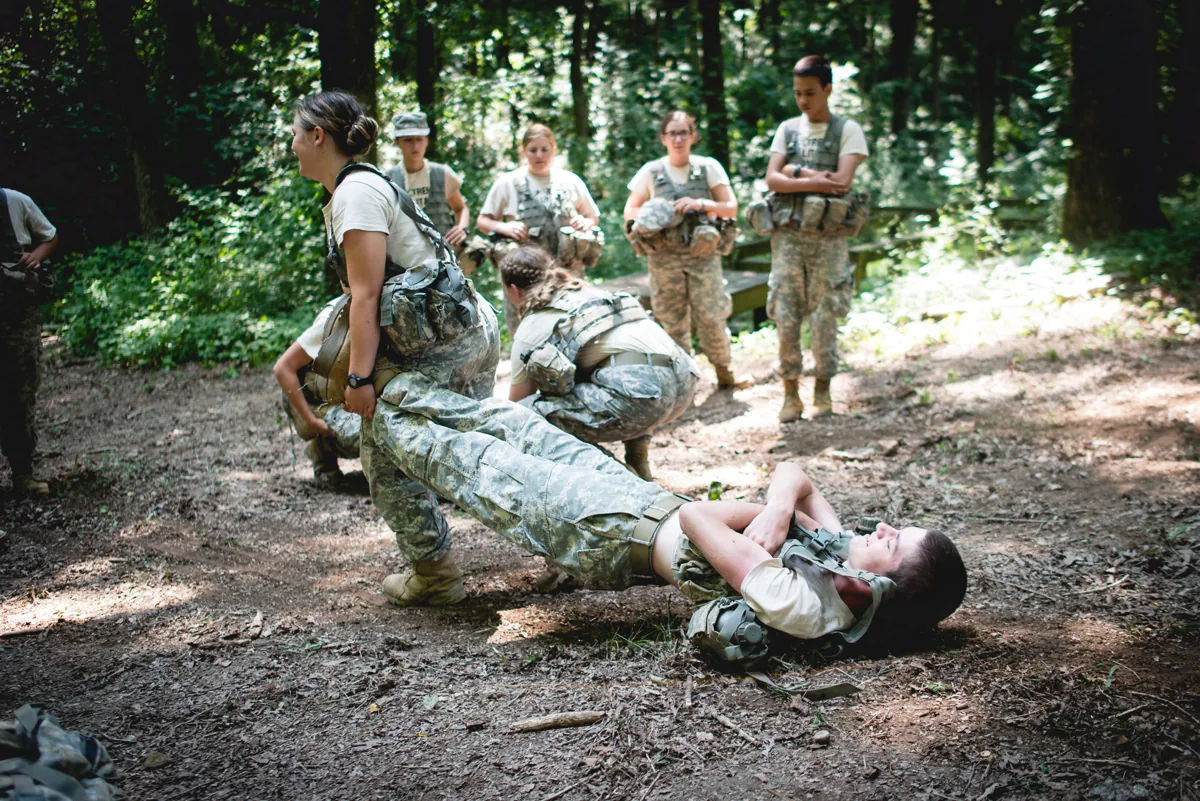
The three-week Cadet Medic School provides an intensive introduction to emergency medical services through Emergency Medical Responder (EMR) coursework and practical training. Combining classroom instruction, practical skills laboratories, realistic patient care scenarios, and field exercises, the program develops the knowledge, confidence, and leadership required to respond effectively during medical emergencies in both military and civilian environments.
02 / TRAINING FOCUS
Build on What You Have Earned.
A clear view of the areas covered
through instruction and practical experience.
CPR, AED and Airway Principles
Medical and Traumatic Emergencies
Bleeding Control and Shock Recognition
Patient Movement and Field Scenarios
Scene Safety, Teamwork and Emergency Communications
Explore the full course outline
CADET MEDIC SCHOOL - 3 Weeks
Training begins with comprehensive classroom instruction covering the foundations of emergency medical care, patient assessment, anatomy and physiology, medical and traumatic emergencies, bleeding control, airway management, shock recognition, and emergency communications. Cadets also learn medical ethics, patient confidentiality, infection control, documentation, and the importance of professionalism while serving as members of an emergency response team.
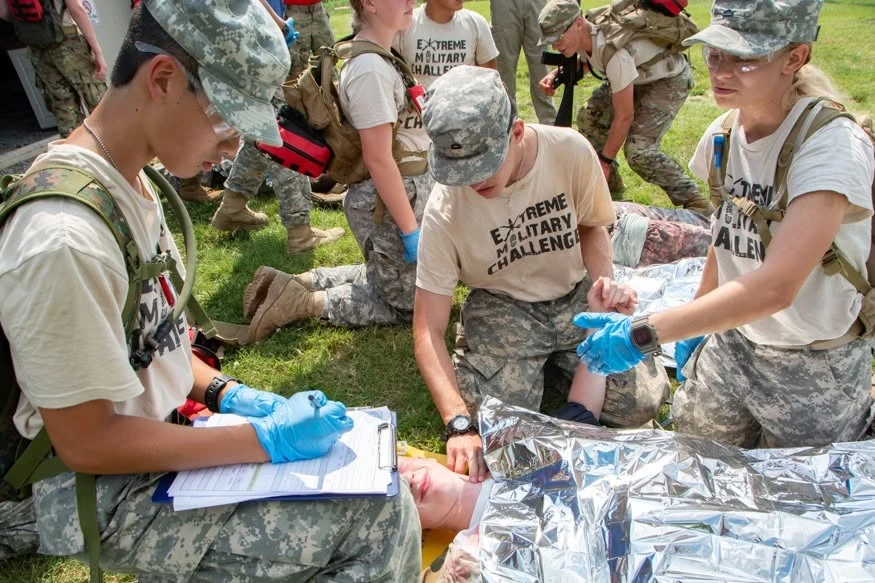
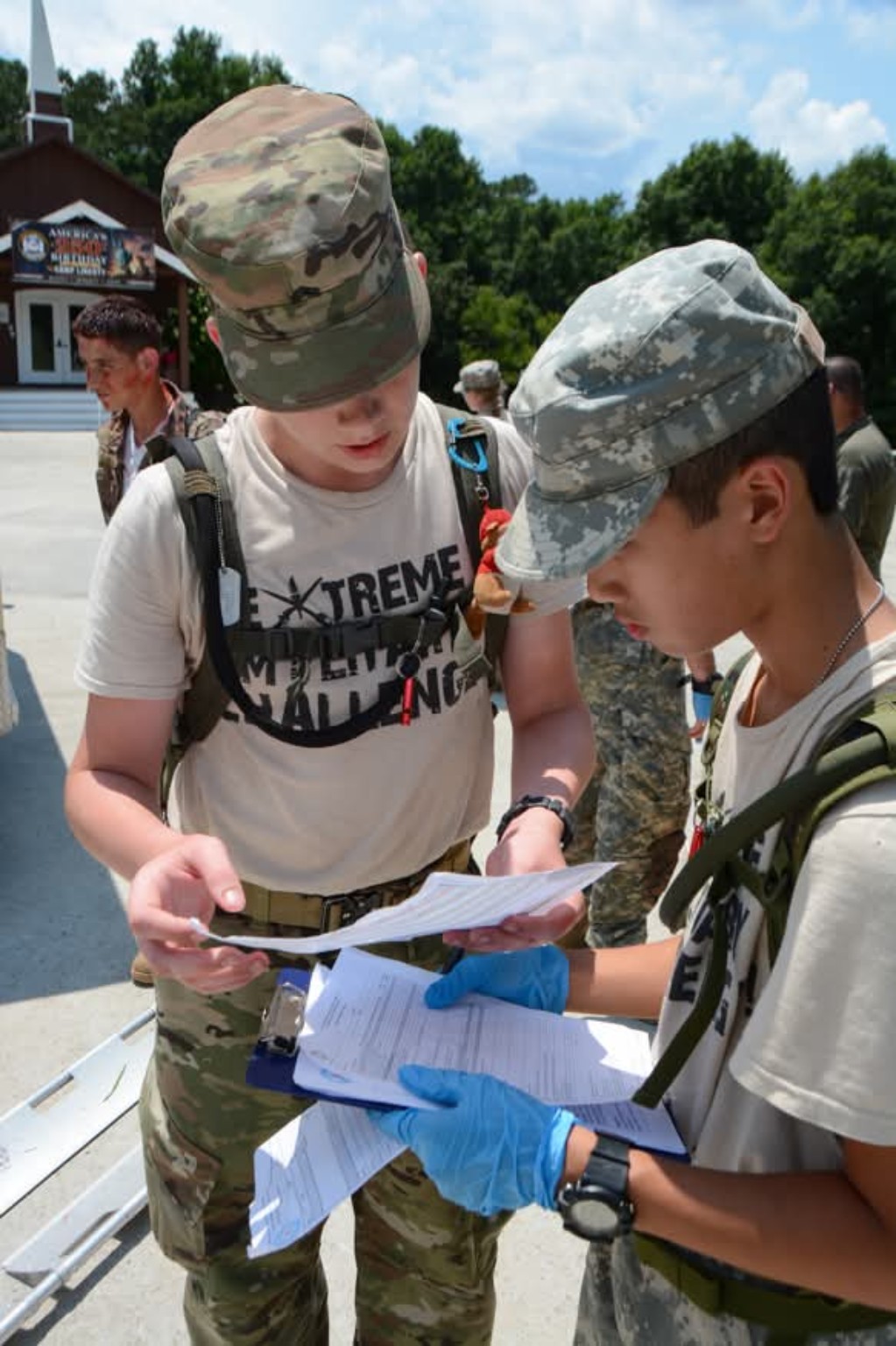
During the practical training phase, Cadets apply these principles through extensive hands-on instruction under the supervision of experienced military and civilian medical professionals. Participants practice patient assessments, splinting, bandaging, spinal motion restriction, bleeding control, oxygen administration, CPR, automated external defibrillator (AED) operation, and emergency childbirth while responding to realistic medical emergencies in a disciplined military training environment.
Areas of Instruction
Emergency Medical Responder (EMR) principles
Patient assessment and vital signs
Anatomy and physiology
Airway management and oxygen administration
Cardiopulmonary Resuscitation (CPR) and AED operation
Medical and traumatic emergency care
Bleeding control and shock management
Fracture stabilization and splinting techniques
Spinal motion restriction and patient movement
Environmental emergencies
Behavioral and psychological emergencies
Obstetrical and neonatal emergencies
Emergency communications and documentation
Infection control and scene safety
Mass casualty incident response
Disaster medicine fundamentals
Incident Command System (ICS)
Team leadership and medical decision-making
Risk management and operational safety
Physical fitness and field medical operations
Throughout the school, Cadets are challenged to demonstrate compassion, professionalism, sound judgment, and teamwork while caring for simulated patients in realistic emergency scenarios. Training emphasizes calm decision-making under pressure, leadership, accountability, effective communication, and adherence to established emergency medical standards.
Graduates leave the school with a strong foundation in emergency medical response, enhanced leadership abilities, and practical lifesaving skills that prepare them for future service in emergency medical services, military medicine, healthcare, public safety, search and rescue, emergency management, or other service-oriented careers.
Cadets who successfully complete all academic, practical skills, and field training requirements earn graduation from Cadet Medic School and may be eligible to receive Emergency Medical Responder (EMR) certification upon successful completion of the required cognitive and psychomotor examinations.
THREE WEEKS OF DEVELOPMENT
Learn the Skills.
Put Them into Practice.
Weeks 1–2: Instruction and Skills
Formal training combines classroom learning, medical-skills practice and the coursework for applicable certifications. Cadets repeatedly practice lifesaving techniques so the equipment and procedures become familiar.
Week 3: Scenarios and Mentored Support
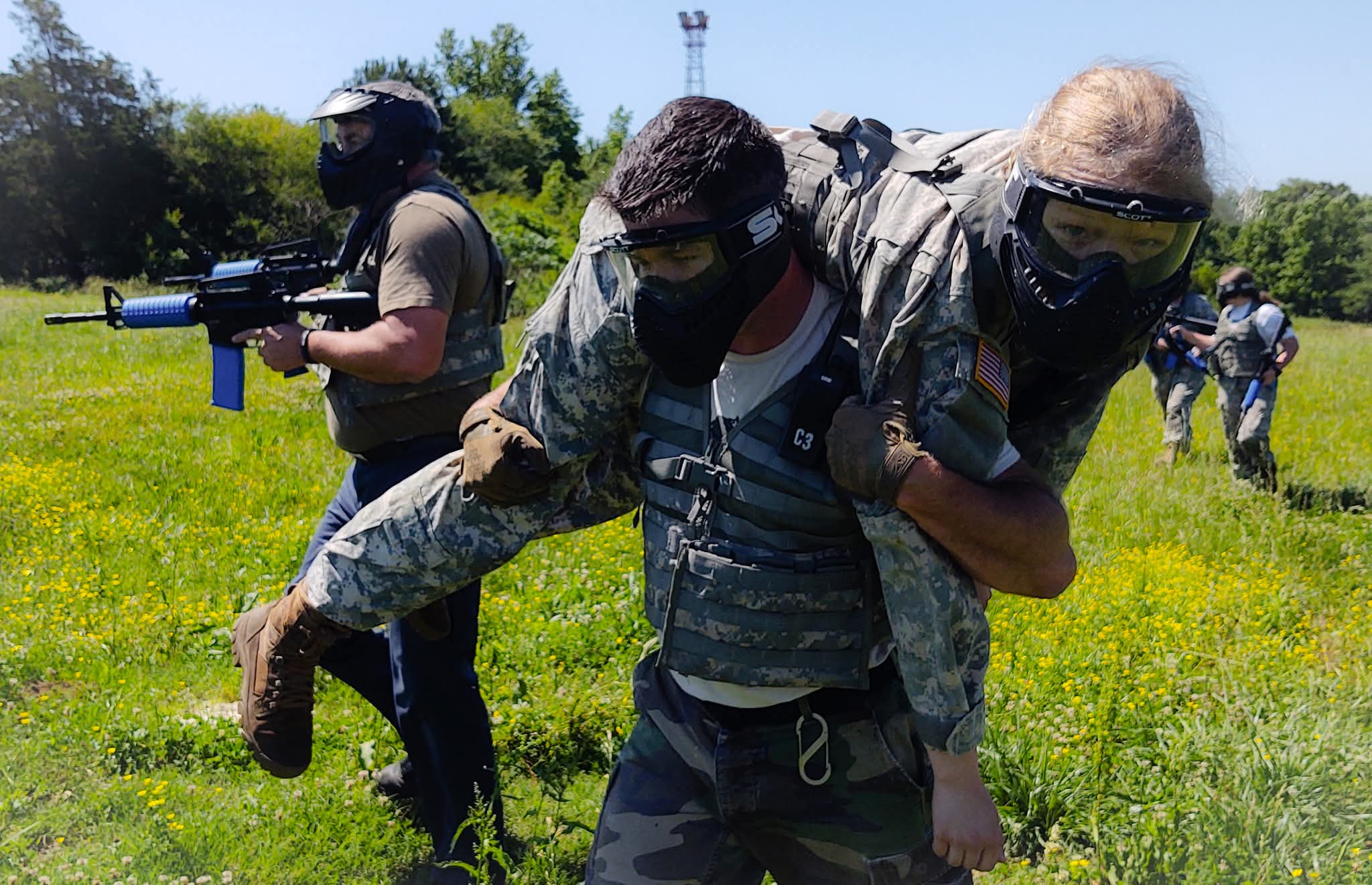
Cadets apply what they have learned in realistic medical scenarios and supervised patient-care practice. Practical instruction is appropriate to the participant’s training and takes place under qualified medical mentorship.
A Stocked Individual First Aid Kit
Each student receives a stocked Individual First Aid Kit (IFAK) during the course, uses its contents during scenario training and keeps the kit on completion. Training includes the use of tourniquets, chest seals and supplies for minor wounds.
EMR certification is earned through the applicable course, eligibility, cognitive and psychomotor requirements. Attendance or receipt of equipment does not by itself confer certification.
03 / PLAN YOUR TRAINING
Know the Dates.
Make Your Plan.
Swipe sideways to see all columns. Keyboard users can focus the table and use the arrow keys.
| Session | Start | End | Graduation | Tuition |
|---|---|---|---|---|
| 2027 | Jun 6 | Jun 26 | Jun 26 | $3,750 |
2027
- Dates
- Jun 6 – Jun 26
- Graduation
- Jun 26
- Tuition
- $3,750
Prices are in U.S. dollars. Confirm availability, eligibility and final charges in CampMinder. Tuition, Discounts & Additional Costs ↗ · Nonrefundable Payment Terms ↗
Visiting for this graduation? Review summer family-event locations, times and release instructions ↗
XMC VIDEO
Watch the Experience.
Explore Cadet Medic School. Review the course description and limits of this youth training program; participation is not a professional medical qualification.
Cadet Medic School
Silent program video · 1:11
Hands-on Emergency Response Training
Three weeks of classroom instruction, practical skills and realistic team scenarios. Practice with real ambulances and medical equipment in training scenarios.
YOUR NEXT STEP
Ready for Your
Next Challenge?
Enroll For 2027 ↗Questions about the right course or next step? Talk with Admissions.855-XMC-CAMPadmissions@xmccamp.com ↗